Create A Strong Core Search Foundation (SEO and SEM)
Start with something solid before chasing shiny tools like chatbots or voice helpers. Picture Google listing your site naturally because it actually fits what people search for. That is SEO (Search Engine Optimization); fixing how your site works behind the scenes and matching the words users type in their search bar. When someone hunts for a service you offer, being near the top happens thanks to careful tuning over time. Tossing ads into the game? That is SEM (Search Engine Marketing), mixing those organic efforts with sponsored spots on Google Ads, Bing Ads, or local ad networks to grab extra attention. Think of SEM as leasing a massive billboard right out front while SEO builds your permanent presence behind it. Should someone search the web because they need an urgent roof fix, both methods team up to lift your name to the top spot. This pairing forms a core setup. Everything else works better because of it. Once you explore how our team got started, you will see we never skip setting this base before moving further. 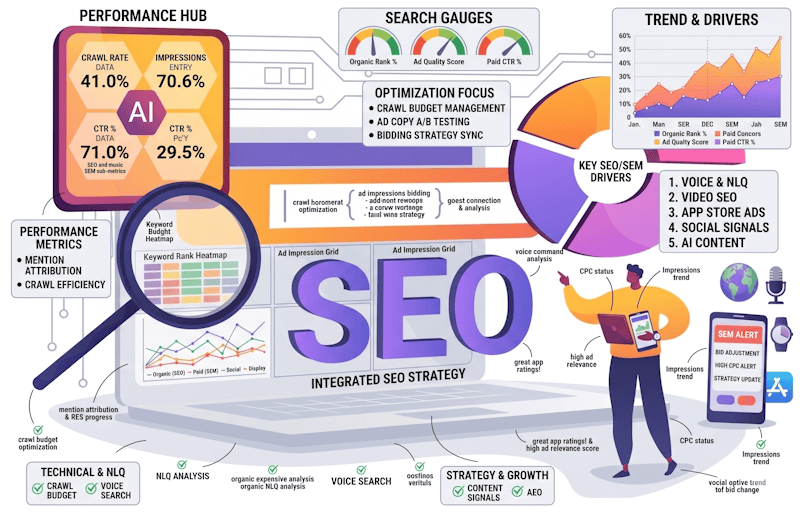
Hidden
What, exactly, is the difference between SEO and SEM?
One way to look at it is to understand that SEO shapes how well a site ranks in search results without paying for each click. Instead of funding placement, effort goes into content and website structure. Meanwhile, ads bought through SEM pop up right at the top, fast and visible, but with a cost. These paid spots work quickly while slow-building trust happens underneath. Growth from SEO takes patience, while the instant reach of SEM fills gaps early on.
Why do I need organic optimization if I am already paying for ads?
Paid ads stop the moment your daily budget runs out. No budget, no placement — it is that simple. A strong organic presence through SEO keeps your business generating service requests and inbound inquiries around the clock without paying a premium for every single visitor who finds you.
Expand Your Local Territory for Additional Reach (LSEO, MEO, MSEO)
Once that core foundation is built, reaching nearby customers matters most when you’re offering services in a local area. Reaching neighbors online drives real results instead of distant clicks. Map rankings plus directory listings shape how locals discover what you provide. LSEO (Local Search Engine Optimization) and MEO (Map Engine Optimization) connect you with nearby users who are actively searching, helping them choose you without delay. Visibility within your region turns into booked jobs from those who are already looking. Getting seen on local maps means keeping your business name, contact details, and location identical everywhere. Whether it is your Google Business Profile, Apple Maps, Yelp, or the Better Business Bureau, consistency is key. To rank beyond just Google, strategies like MSEO (Multi-Search Engine Optimization) help capture traffic on sites like Bing or DuckDuckGo, especially among niche audiences. Focusing some attention here makes sense when you want to help grow additional steady appointments without constant outreach. You can look into our web marketing packages and notice how focusing on area-based searches builds reliable customer interest over time. 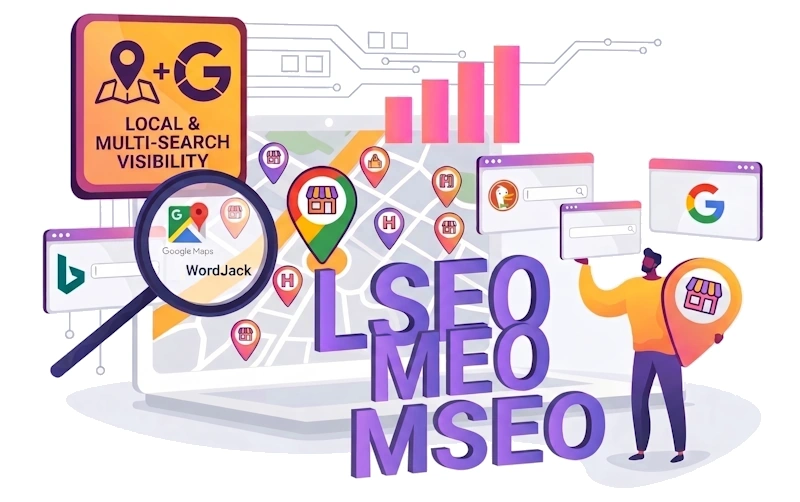
Hidden
Why do local businesses need LSEO if they already have general SEO?
Most companies work on basic SEO to rank for broader terms, but earning local customers takes something different. LSEO targets local rankings, which depend heavily on map-based listings, not just keywords. Picture someone hunting for help close by. In those cases, search engines skip distant options entirely and scan regional databases first.
Is MSEO really necessary if Google controls most of the market?
Most people search on Google, but plenty choose other paths. MSEO (Multi-Search Engine Optimization) captures Bing or Yahoo visitors, plus those using private search tools. These folks tend to decide faster when buying since fewer ads crowd their view, making them cost-effective leads even if they are a smaller group.
Capturing the Future of Search Through Direct Answers and AI (AEO, GEO, AIO, AISO, LLMO)
Earning a spot on local maps is a great start, but the way people search is changing fast. Now, potential customers aren’t just punching in broken phrases. Instead, they speak full sentences into devices. What helps your site pop up right there in that boxed summary atop Google results? That is AEO (Answer Engine Optimization), focused purely on retrieval — getting your content selected as the direct answer. Following closely is GEO (Generative Engine Optimization), which shapes how systems such as ChatGPT, Gemini, or Perplexity name your brand when someone seeks advice — this is about being cited, not just ranked. Then comes AIO (Artificial Intelligence Optimization), sometimes referred to as AISO (Artificial Intelligence Search Optimization). While AIO shapes how AI tools process your site broadly, AISO focuses specifically on how your business appears in AI-generated search summaries on traditional engines like Google. Behind the scenes, LLMO (Large Language Model Optimization) organizes your website’s information using clean code, making it simple for AI systems to understand what you do. The result is faster decisions and more inbound leads, without a customer ever scrolling through a results page. 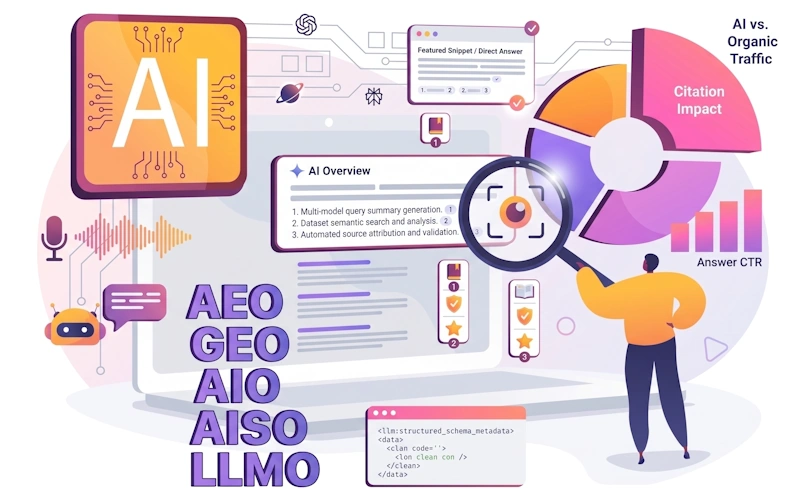
Hidden
Do local service companies actually require GEO alongside AIO?
Most small service companies wonder if they actually require GEO (Generative Engine Optimization) alongside AIO (Artificial Intelligence Optimization). These two methods look different but act in similar ways. One shapes web content so bots pull accurate details during searches, while the other pushes those same facts into AI responses automatically, making sure virtual assistants name your company first.
What sets LLMO apart from classic technical optimization?
Instead of chasing old metrics like keyword counts or link volume, LLMO (Large Language Model Optimization) shapes content so AI text systems can grasp meaning quickly. Structure matters more here. Clean schema markup and clear, direct phrasing guide the process.
Using Experience to Turn Visitors Into Earnings (SXO and CRO)
Even if AI answers and local maps drive a hundred people to your website, it doesn’t help much if they never pick up the phone. SXO (Search Experience Optimization) blends how well you rank with how users feel when browsing. Speed matters. Pages must load quickly. A mobile-friendly layout is not optional anymore. Menus need to be so obvious that they almost disappear into usefulness. CRO (Conversion Rate Optimization) takes over to figure out why clicks do or do not happen. Testing new headlines reveals which ones pull attention better. Button placement can make a measurable difference. Shorter forms often get more replies than long ones. Smoothing the rough parts of a site starts generating scheduled estimates and signed work orders. See what businesses say after ditching empty visits for real results. Chasing leads instead of clicks reshapes how local businesses grow. 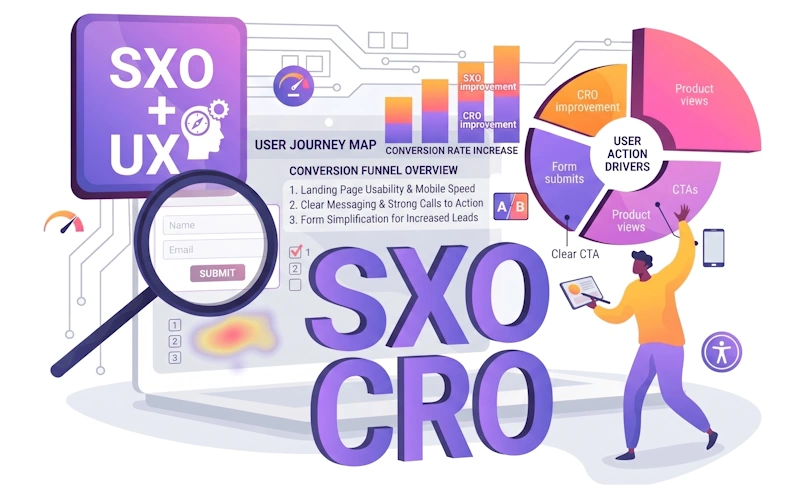
Hidden
What sets CRO apart from regular SEO?
While SEO aims to draw people toward your site, CRO (Conversion Rate Optimization) takes over once they land there. Instead of chasing traffic, it examines how users behave right after arrival. The goal isn’t rankings. It is response. While SEO fills the room, CRO works on making sure at least one person reaches out.
Can SXO impact actual search rankings?
Yes. SXO (Search Experience Optimization) can directly affect where you place in search results. When people leave fast or pages load slowly, search engines take notice and apply penalties. By improving how users engage with your site, SXO builds session time naturally, which signals quality to the algorithm.
Reach Growth on New Search Platforms (VSO, SVO, ASO, SEvO)
Beyond getting your own website to convert visitors, you have to realize potential customers are not just typing on standard search engines anymore. They are talking to gadgets. Think Siri getting asked who fixes burst pipes at midnight. VSO (Voice Search Optimization) steps in there with crafted responses that match how people actually speak, not just how they type. Videos surface differently these days, too, not only on Google but inside TikTok feeds and YouTube results. SVO (Search Video Optimization) shapes your footage, so it appears when potential customers are actively looking. Even skippable ads can perform when tuned correctly through TrueView setups. Getting seen in app stores matters when you offer a unique application, which is where ASO (App Store Optimization) helps. SEvO (Search Everywhere Optimization) is the practice of treating every platform with a search bar — Reddit, Amazon, and Pinterest — as its own distinct discovery engine that requires its own optimization approach. The reality? Being on every platform is not required. Focus only on spots where your target audience actually searches. A clear picture of your current reach across digital spaces begins with a free website checkup. That step reveals what is working right now. 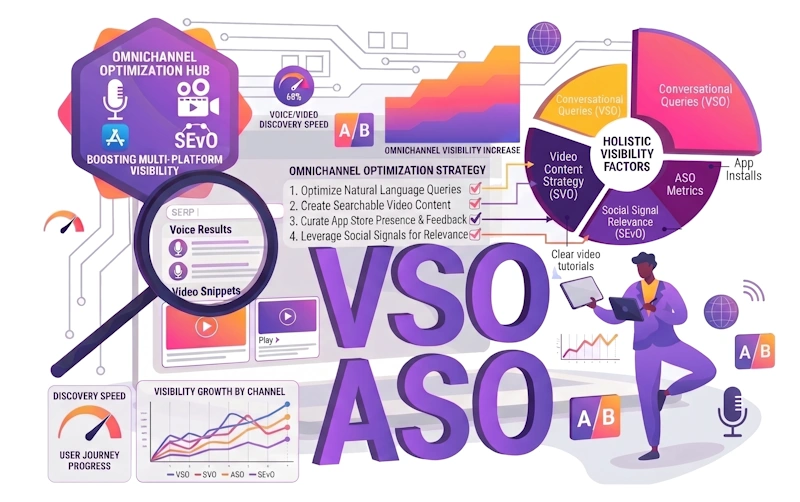
Hidden
Is VSO actually important for emergency contractors?
Picture someone with a burst pipe speaking into their phone under pressure. Chances are, they are using voice search. VSO (Voice Search Optimization) helps emergency contractors earn placement by matching how people talk when they need help fast. Ranking well here means being first when it counts most.
Does SVO apply to home service businesses?
Most home service professionals can benefit from SVO (Search Video Optimization). It fits naturally when contractors share clips of completed jobs, demonstrate how repairs are done, or highlight client feedback. When these recordings carry the correct tags, they appear in regular search results just like written posts do.
Dominating Market Share and Protecting Brand (SOV, SMO, ORM)
With your presence spread across search results, voice assistants, and local directories, consider who really shapes the final conversation around your business. Your standing relative to nearby rivals is what SOV (Share of Voice) measures directly. Your slice of that conversation matters. When a competing electrician grabs most of the local attention, your piece shrinks without warning. Profiles popping up during brand searches come down to SMO (Social Media Optimization), which involves making sure Facebook or LinkedIn listings appear when someone looks you up. What shows up when someone searches your name? A steady flow of positive feedback across sites like Yelp or your Google listing shapes opinions before a service request is ever submitted — that is ORM (Online Reputation Management) at work. Trust grows quietly and steadily through what people see first. 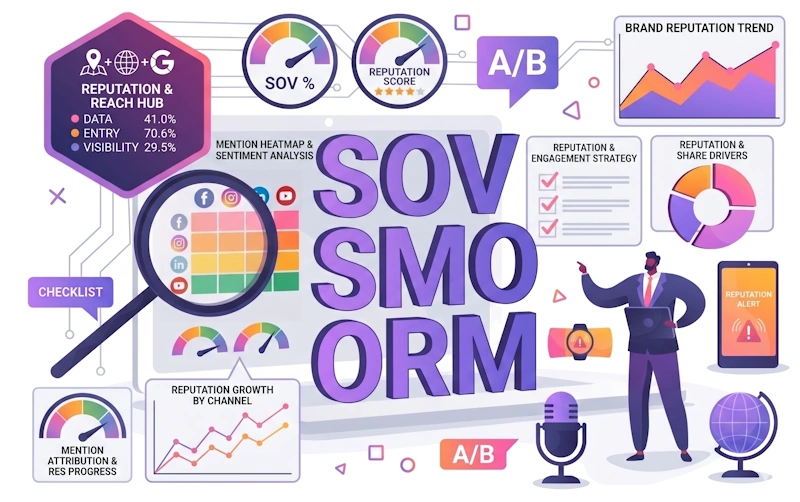
Hidden
How is SOV measured for a local business?
Your market share comes down to who earns the top spots when people search nearby. SOV (Share of Voice) focuses only on keywords tied closely to what you sell and compares your presence against the three or four rivals fighting for that same attention in your market.
Why is ORM considered a search optimization tactic?
Most people do not realize how closely review activity ties into search performance. A steady flow of fresh, positive feedback through ORM (Online Reputation Management) tells search systems that a business can be trusted. That trust often leads to better positioning on local maps and beyond.
THE 2026 MARKETING ACRONYM DECODER
| Acronym | Definition & Primary Goal |
|---|---|
| SEO | Search Engine Optimization: Improves your site’s organic ranking in search results over time by optimizing content, structure, and technical performance. The goal is to earn free, consistent traffic without paying for every click. |
| SEM | Search Engine Marketing: Runs paid ads on Google, Bing, and local ad networks to place your business at the top of results immediately. Works best alongside SEO to cover both short-term visibility and long-term organic growth. |
| LSEO | Local Search Engine Optimization: Gets your business ranked in local map and directory results when nearby customers search for services you offer. Focuses on Google Business Profile, citations, and location-specific content. |
| MEO | Map Engine Optimization: Optimizes your presence specifically within map-based search results on Google, Apple Maps, and similar platforms. Consistent business details and strong review signals are the core levers here. |
| MSEO | Multi-Search Engine Optimization: Extends your reach beyond Google to Bing, DuckDuckGo, and other alternative search engines. Captures niche audiences who often convert faster because they see fewer competing ads. |
| AEO | Answer Engine Optimization: Positions your content as the direct answer inside featured snippet boxes at the top of search results. Structures information so search engines select your site as the most trusted, immediate response. |
| GEO | Generative Engine Optimization: Gets your business cited and recommended by AI tools like ChatGPT, Gemini, and Perplexity when users ask for service providers. Focuses on being mentioned, not just ranked. |
| AIO | Artificial Intelligence Optimization: Optimizes how AI systems broadly understand and interpret your website’s content. Ensures the right signals are in place so AI-driven tools accurately represent what your business does. |
| AISO | AI Search Optimization: Targets how your business surfaces specifically inside AI-generated search summaries on traditional engines like Google. A focused subset of AIO aimed at the search results page itself. |
| LLMO | Large Language Model Optimization: Structures your site’s data and content so AI text systems can read and understand it clearly. Uses clean schema markup and direct language so AI tools pull accurate information about your business. |
| SXO | Search Experience Optimization: Combines search ranking performance with on-site user experience. Fast load times, mobile-friendly layouts, and intuitive navigation all contribute to both better rankings and more engaged visitors. |
| CRO | Conversion Rate Optimization: Refines your site’s layout, messaging, and calls to action to turn more visitors into booked jobs. Tests headlines, button placement, and form length to find what drives the most responses. |
| VSO | Voice Search Optimization: Tailors your content for spoken queries on Siri, Alexa, and Google Assistant. Matches the natural, conversational phrasing people use when speaking rather than typing a search. |
| SVO | Search Video Optimization: Optimizes video content for discovery on YouTube, TikTok, and Google video results. Proper tagging, titles, and descriptions help service videos appear alongside written search results. |
| ASO | App Store Optimization: Helps your app rank higher in the Apple App Store and Google Play search results. Covers app title, description, screenshots, and review signals to drive more installs. |
| SEvO | Search Everywhere Optimization: Treats every platform with a search bar — Reddit, Amazon, Pinterest, and beyond — as its own distinct discovery engine. Ensures your business is findable wherever your target audience actually searches. |
| SOV | Share of Voice: Measures how often your brand appears in search results compared to local competitors for the same keywords. A shrinking share of voice is often the first sign a competitor is outpacing you online. |
| SMO | Social Media Optimization: Optimizes your social profiles so they surface prominently when someone searches your business name. Consistent branding, complete profiles, and active posting all strengthen how you appear in brand searches. |
| ORM | Online Reputation Management: Builds trust through proactive review management, response strategy, and consistent positive feedback across Yelp, Google, and industry directories. Strong ORM signals credibility to both customers and search engines. |