
If your recent monthly report shows some keywords dropping sharply, or disappearing altogether, you’re not alone. In many cases, though, these drops don’t reflect what your customers see on Google.
What Are “Poisoned” Search Results?
Ranking tools check where your website appears by sending automated searches to Google. Beginning around September 13, 2026, Google started returning altered results pages to many of these automated requests. These are known as “poisoned SERPs” (search engine results pages).
A poisoned page looks normal, but many of the sites that usually rank have been swapped for loosely related or unrelated ones. In one example reported by Semrush, a search for a baby stroller in Brazil returned a dental supply store’s page, because both products share the Portuguese word “carrinho.” Since nothing looks wrong, a ranking tool may record a drop that never happened.
Why Is Google Doing This?
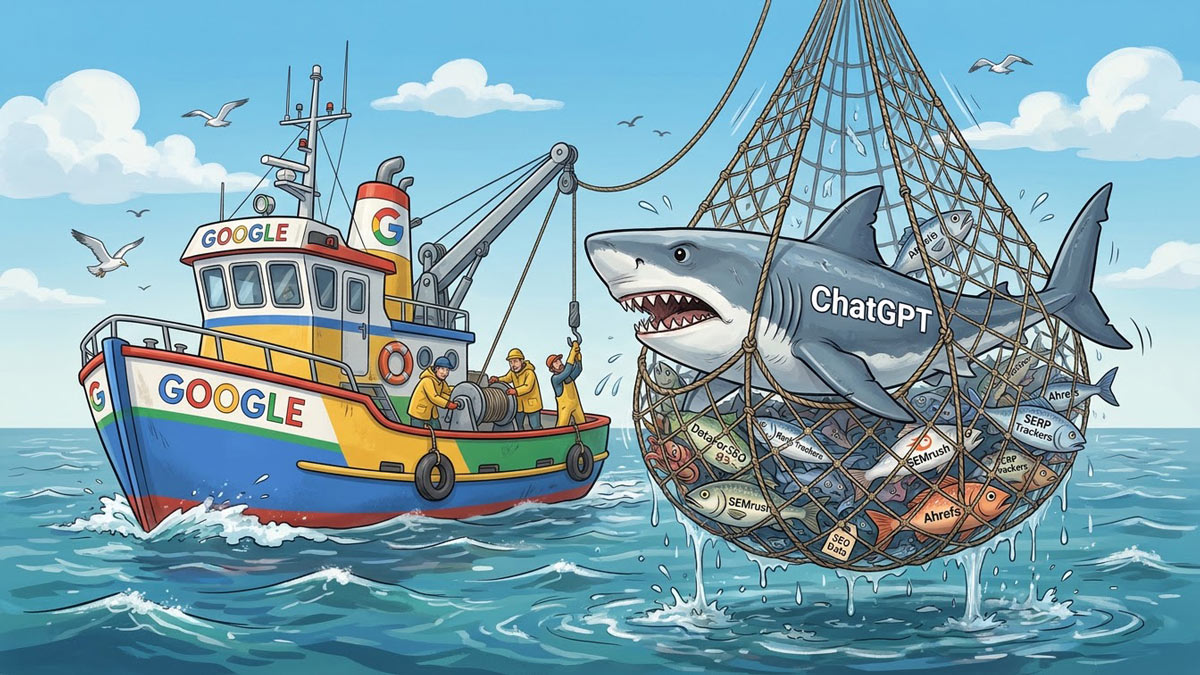
Google hasn’t publicly commented, but many in the industry believe the real target is AI tools like ChatGPT. When ChatGPT needs current information, it often runs a Google search first and branches out; our team has seen this firsthand in ChatGPT’s own data exports, and 2025 reporting found OpenAI had been using scraped Google results for some answers. By feeding misleading results to automated requests, Google may be degrading the information these AI tools depend on, and giving people a reason to return to Google directly. Rank trackers collect search results the same way, so they appear to have been caught in the same net.
How This May Have Affected Your Reports
WordJack uses DataForSEO to collect ranking data. DataForSEO estimates that roughly 20–30% of the results pages it collected were poisoned starting around September 26, with the worst stretch running into mid-October. While Google has served fewer poisoned pages since then, the problem hasn’t gone away. We’ve continued to see it in some clients’ reports covering late October through November, and other tracking providers have reported a new wave in that same period.
The impact hasn’t been even. Google appears to decide search by search, which is why some reports showed no change, others showed minor shifts, and some showed drastic drops. Results on page two of Google have also been swapped more often than page one, so keywords just outside the top 10 tend to be hit hardest.
How to Tell a Real Drop From Bad Data
The best indicator is your actual website traffic. In Google Analytics (GA4) or your monthly report, look at your organic search traffic, that’s the real visitors who found you through a search engine. If that traffic held steady while your rankings appeared to fall, the drop is most likely bad data. A real ranking loss usually shows up as fewer visitors, and often fewer calls, form submissions or sales.
Other warning signs include a keyword that drops sharply and recovers soon after, or unrelated sites and forums suddenly appearing above you. Most poisoned readings are temporary, so a one-time drop should be treated as unconfirmed until it shows up again.
What We’re Doing About It
DataForSEO launched a verification feature in November that detects poisoned pages and replaces the affected listings with verified results. However, it can’t correct data that was already collected, and Google continues to change how it responds to automated searches, so recent reports may still show misleading drops. Our team is reviewing ranking data alongside your website’s traffic data so decisions are based on accurate information.
Here’s the Good News!
While we use these trusted (but occasionally poisoned) third party tools to summarize results, it’s not all we use. When we see results that seem “off”, our SEO team does a deeper dive using Google Search Console as well as manual searches to confirm performance. In almost all cases, we have been able to confirm that – despite some lower reported rankings – the real world ranking results remain strong, growing and consistent to what you have come to expect with your WordJack program.
Every situation is different. If you’ve noticed an unexpected drop and want to know whether it’s real, contact your Marketing Manager before making any changes to your website. We’re happy to walk through your data with you and keep your website’s performance front and center.
